
Diabetic Retinopathy: How Diabetes Can Damage Your Eyes Without You Even Realising It
If you have diabetes, your doctor has likely hammered home the importance of sugar levels, diet and foot care at every visit. But here’s something that’s often overlooked in that conversation – diabetes can silently harm your eyes for years before you detect a single change in your vision. By the time symptoms appear, the damage is usually already quite advanced. Diabetic retinopathy is one of the leading causes of preventable blindness in adults, but a large number of diabetics have never even had a proper retina check.
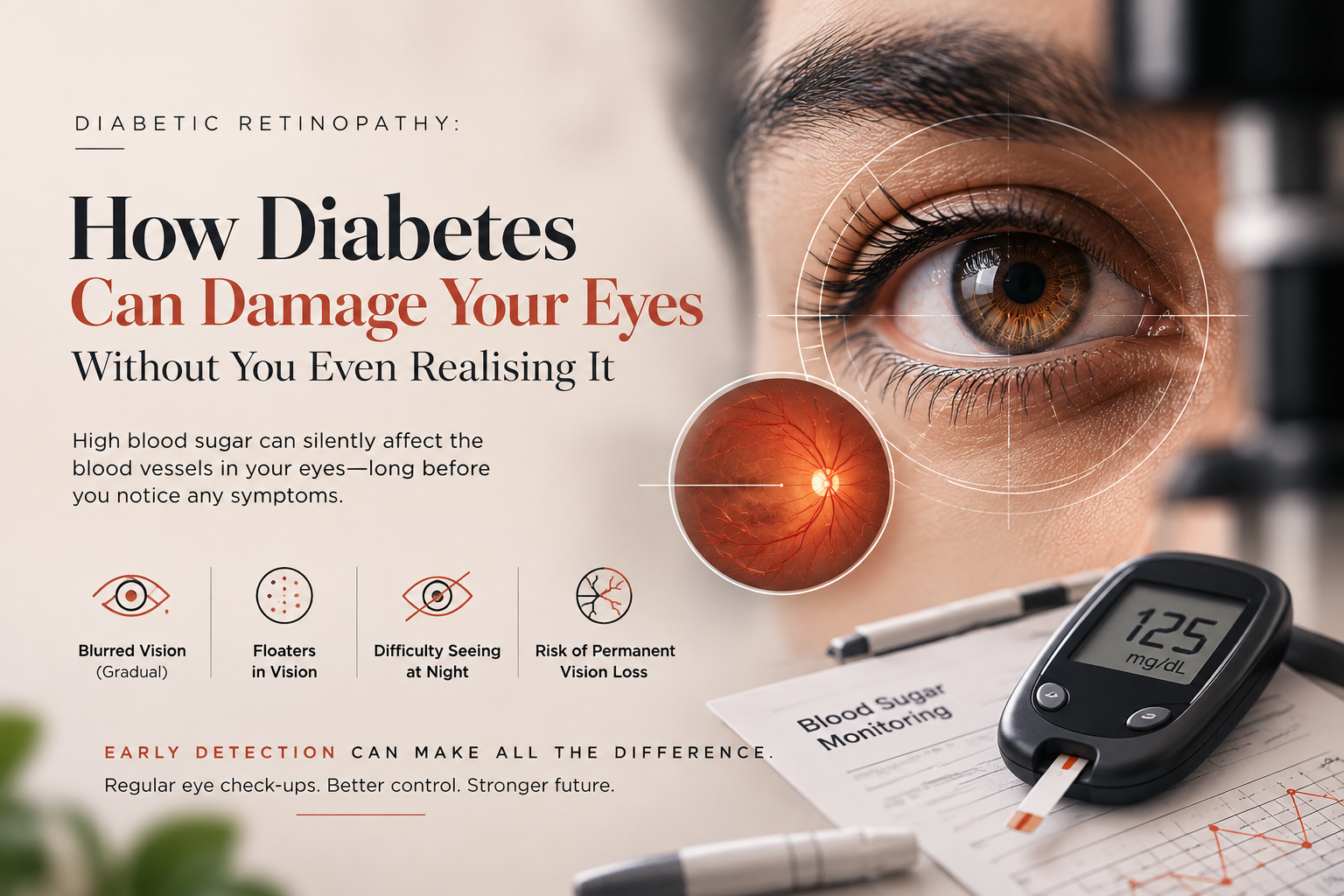
What does diabetic retinopathy mean?
Your retina is a layer of light-sensitive tissue at the back of your eye. Your retina requires a network of tiny blood vessels to do what it needs to do. When blood sugar levels stay high for long periods of time, these blood vessels start to get damaged. In the first stage they become weaker and leak small amounts of fluid or blood into the retina. As the disease progresses, the eye begins to grow new, abnormal blood vessels to compensate for the loss—but these new vessels are weak and prone to bleeding, and that’s when things can get serious. Diabetic retinopathy, if untreated, can lead to retinal detachment or complete loss of vision – and the frustrating part is that all of this can happen slowly and without any pain.
Things to watch out for
And this is exactly why the condition is so dangerous – there are just no obvious symptoms for a long time. As it goes on, though, you may start to see blurred or flickering vision, dark spots or floaters drifting across your vision, colours that look washed out or faded and areas of vision which seem empty or dark. In the later stages, sudden loss of vision may occur, usually due to bleeding in the eye. The tricky part is that most of these symptoms aren’t noticeable enough to worry someone until the retina has already suffered some real damage — which is part of why waiting for symptoms isn’t a safe strategy here.
The real reason why annual eye exams matter
Here’s the thing — a diabetic eye checkup can detect retinopathy way before you’d ever see or feel anything wrong yourself. With a dilated retinal exam, the doctor can actually see the blood vessels at the back of your eye and can detect early leakage, swelling or abnormal growth of vessels, sometimes years before it would noticeably affect your vision. Doctors recommend a full eye exam at least once a year for anyone with diabetes, and more often if you’ve already been diagnosed with retinopathy or have had inconsistent blood sugar control. It’s also worth remembering that duration of diabetes matters as much as the numbers — someone who’s been diabetic for 15 years is at meaningfully higher risk even if their sugar levels have been reasonably controlled. If it’s been a while, it’s worth booking a visit with a retina specialist in Bhopal rather than assuming your vision “feels fine” means everything’s okay.
Options for treatment
The good news is that treatment for diabetic retinopathy has advanced significantly, and when it is detected early, results are truly favourable. Tight control of blood pressure, cholesterol, and blood sugar is the main focus in the early stages since it can considerably slow the progression. Anti-VEGF injections are frequently used in more advanced cases to lessen aberrant blood vessel growth and swelling in the retina; these have emerged as one of the more potent treatments in recent years. Another option is laser treatment (photocoagulation), which is used to shrink abnormal vessels or seal leaking ones. To remove blood from the eye and restore the retina, a surgical procedure known as a vitrectomy may be required in situations involving severe bleeding or scar tissue. Once more, early detection is far more important than treatment after the fact because none of these treatments can undo damage that has already occurred.
Preventive advice that is truly beneficial
The single most important thing you can do to prevent or slow retinopathy is to keep your blood sugar levels within the target range your doctor recommends. In addition, controlling blood pressure and cholesterol, quitting smoking, maintaining an active lifestyle, and adhering to your yearly diabetic eye examination schedule all have a significant impact over time. Additionally, it is beneficial to get checked out before waiting for your vision to “feel off” because, in the case of this particular condition, the absence of symptoms does not imply the absence of damage. Diabetes and vision are much more closely related than most people realise, and the relationship is reciprocal: poor blood sugar control damages your eyes, but early detection of that damage through routine screening is what really protects your vision over time. If you have diabetes and haven’t had a retinal exam this year, it really is worth getting one done before it gets worse.